
9 Same Day Business Funding Options in Canada (2026)

TL;DR
Most “same-day business funding” claims are marketing fiction. Realistic timelines range from a few hours (merchant cash advances, existing factoring facilities) to several weeks (government-backed programs like CSBFP). This guide ranks nine funding options by actual speed, real cost, and honest risk, so Canadian business owners can pick the right product for their situation, not just the fastest one. If you need help matching your business to the right option, submit a loan enquiry to start the conversation.
Why Speed Matters (But Not More Than Survival)
Nearly 40% of Canadian small businesses report that financing delays have directly cost them a contract or growth opportunity, according to BDC research. That number tracks with what business owners experience on the ground. The CFIB’s 2023 Banking Survey found that 62% of small business owners said the loan process took longer than expected.
So the urgency behind searching for same day business funding options is real. Missing a purchase order, failing to make payroll, or losing a supplier discount because capital arrives two weeks late can be devastating.
But speed without sustainability is its own kind of trap. A funding product that arrives in four hours but costs you triple-digit annualized interest can create problems worse than the one it solves. The goal of this guide is to help you find the fastest option that’s also the right one.
At-a-Glance Comparison Table
| Funding Type | Realistic Speed | Typical Annualized Cost | Minimum Requirements | Best For | Risk Level |
|---|---|---|---|---|---|
| Merchant Cash Advance | Hours to same day | 35–45%+ (triple-digit APR possible) | 3–12 months in business, card sales | Retail/restaurant emergency cash (last resort) | High |
| Invoice Factoring | Same day (existing); ~1 week (new) | 18–36% annualized (1.5–3%/month) | B2B invoices, creditworthy customers | Manufacturers, distributors, professional services | Low-Medium |
| Short-Term Online Loan | 24 hours to same day | 15–40% APR | 1+ year in business, $100K+ revenue, 500+ credit | One-time defined capital need | Medium |
| Online Business Line of Credit | 24–48 hours | 15–40% APR (alternative); Prime+2–5% (bank) | $10K/month revenue, 5+ months, 400+ credit | Ongoing revolving working capital | Medium |
| Equipment Financing | Same-day approval; 2–5 days funding | 6–25% | Specific asset purchase, verifiable seller | Asset acquisition (trucks, machinery, tech) | Low |
| Platform Capital (Shopify/Square) | 1–5 business days | Upfront fee (varies) | Active seller on platform | E-commerce and POS-based businesses | Medium |
| BDC Small Business Loan | 10–30 days | Prime + 2–6% | 12+ months operating, $100K+ revenue, 600+ credit | Growth capital and expansion | Low |
| CSBFP | 2–8 weeks | Bank rates + 2% registration fee + 1.25% admin | Under $10M revenue, eligible asset | Equipment, leaseholds, real estate, working capital LOC | Low |
| Commercial Finance Broker | Varies by product matched | Structured for best fit | Any profile (specializes in complex/declined) | Businesses wanting the optimal product, not just the fastest | Lowest (advisory) |
What “Same Day” Actually Means (and What It Doesn’t)
Here’s the distinction most funding websites gloss over: there’s a gap between same-day approval and same-day funding.
Same-day approval means a lender reviews your application and says yes within hours. Same-day funding means money hits your bank account that same business day. These are two different events, and the distance between them can range from hours to weeks depending on the product and your preparation.
As one Canadian lending platform put it bluntly: same day doesn’t mean “within hours of thinking about it.” It means same day from when you’re actually approved, with all documentation complete. Big difference.
The single biggest factor determining whether you get funded quickly is document readiness. Having your financials, bank statements, incorporation documents, and asset details organized before you apply can compress timelines by days. Scrambling to gather paperwork during the application process is what turns a “same-day” product into a week-long ordeal. You can prepare using a working capital document checklist before approaching any lender.
With that context, here are nine same day business funding options ranked by speed tier, starting with the fastest.
Tier 1: Funding in Hours
1. Merchant Cash Advance (MCA)
Best for: Retail or restaurant businesses with consistent daily card sales who need emergency capital and have exhausted every other option.
A merchant cash advance provides a lump sum in exchange for a fixed percentage of your future credit and debit card sales. Repayment is automatic: a set percentage is deducted daily or weekly from your card processor. Some MCA providers approve and fund in under four hours, making this the single fastest same day business funding option available in Canada.
Cost (and this is critical):
MCAs carry effective interest rates typically between 35% and 45%, often excluding additional administrative or hidden fees. In Q1 2026, Statistics Canada reported average factor rates of 1.30. That means for every $10,000 advanced, you repay $13,000. On shorter repayment terms, the annualized cost can reach triple digits.
To put it plainly: on a $50,000 advance at a 1.30 factor rate, you pay back $65,000. If that repayment happens over six months, the effective APR is well above 60%.
Key requirements:
- 3–12 months in business
- Consistent debit/credit card sales volume
- Active business bank account
Pros:
- Fastest funding available (hours, not days)
- Minimal credit requirements
- No collateral needed beyond future sales
Tradeoffs and red flags:
- Daily or weekly automatic withdrawals create severe cash flow pressure
- “Stacking” multiple MCAs (taking a second advance before repaying the first) can trigger debt spirals
- MCAs are not federally regulated in Canada, leading to confusing contracts and sometimes predatory terms
- Multiple FTC enforcement actions in the U.S. demonstrate industry-wide risk, including a $9.8M settlement against Yellowstone Capital for deceiving borrowers about fees
- NPR reported in March 2026 that unregulated MCA lenders have been targeting small businesses struggling to pay tariffs, echoing pandemic-era practices against restaurants and music venues
Practitioners on Reddit consistently warn about MCA costs, with several business owners describing how daily repayment pulls made it impossible to stabilize cash flow.
Choose this if: You have a short-term, clearly defined cash need, consistent card revenue to support daily repayments, and have genuinely exhausted all other options. Read more about last-resort borrowing risks before signing anything.
2. Invoice Factoring (Existing Facility)
Best for: B2B companies with outstanding invoices and 30–90 day payment cycles (manufacturers, distributors, professional services).
Invoice factoring is the sale of your accounts receivable to a factoring company. Because you’re selling invoices rather than borrowing against them, factoring typically does not create additional balance-sheet debt. Once a facility is established, ongoing funding can happen the same day invoices are issued.
Speed reality:
If you already have a factoring facility in place, same-day funding is standard. You submit an invoice, the factor advances 85–90% of its value (some Canadian factors offer up to 95%), and money lands in your account within hours.
If you’re new to factoring, expect the initial setup to take about a week. The first-time process involves verifying your customers’ creditworthiness, setting up accounts, and completing due diligence.
Cost:
Factoring fees in Canada generally range from 1.5% to 3% of invoice value per 30-day period. On an annualized basis, that works out to roughly 18–36%. Additional charges may include setup fees, wire transfer fees, and early termination fees with some providers.
Key requirements:
- B2B invoices to creditworthy customers
- Verifiable accounts receivable
- Customers with reasonable payment histories
Pros:
- Approval based on your customers’ credit, not yours, making it accessible even after a bank decline
- Not a loan, so no new debt on your balance sheet
- Scales with your sales volume (more invoices = more available capital)
Tradeoffs:
- Only works for B2B businesses with invoices. Retailers and direct-to-consumer companies can’t use it.
- Long-term contracts with some factors can be restrictive
- Faster funding options within factoring tend to carry higher fees
Choose this if: You have B2B receivables, need recurring access to working capital, and want a facility that grows with your revenue. Learn more about how invoice factoring works as a funding structure.
Tier 2: Funding in 24–48 Hours
1. Short-Term Online Business Loans
Best for: Businesses needing a one-time lump sum for a defined purpose with 6–24 month repayment.
Traditional bank loans take 25–45 business days on average. Alternative online lenders have compressed that timeline dramatically. Most operate using automated underwriting and digital bank verification. If approved in the morning and final contracts are signed by noon, funds may transfer to your business bank account that same afternoon.
Cost:
Expect 15–40% APR equivalent versus 7–12% from banks. Origination fees, administrative fees, wire transfer fees, and underwriting fees can add significant cost to a loan that looks cheap on the surface. Always request an itemized fee disclosure.
Key requirements:
- Minimum 1 year in business
- $100,000–$250,000 CAD annual revenue (varies by lender)
- Credit score of 500+
Pros:
- Much faster than banks, much cheaper than MCAs
- Fixed repayment schedule provides predictability
- Some lenders accept credit scores as low as 500
Tradeoffs:
- “Same-day” marketing is often aspirational, not guaranteed
- Significantly more expensive than bank financing
- Personal guarantees are common
- Shorter terms mean higher monthly payments
For context, you can compare how online term loans stack up against alternatives to traditional bank loans in Canada.
Choose this if: You have a specific, time-bound need (inventory purchase, emergency repair, bridge financing), solid revenue, and want fixed repayment terms.
2. Online Business Line of Credit
Best for: Established businesses with 6+ months history needing revolving access to working capital.
A business line of credit is revolving financing with a preset limit. You draw what you need, repay it, and reuse the facility. You pay interest only on what you borrow, not the entire limit. The best same day business funding options in the line of credit category come from alternative lenders offering approval in 24–48 hours, compared to weeks from traditional banks.
Cost:
Banks offer Prime + 2–5%. Alternative lenders charge significantly more (15–40% APR) but approve faster and accept weaker credit profiles.
Key requirements (alternative lender example):
- At least $10,000 in monthly revenue
- Minimum 5 months in business
- Credit score above 400
Pros:
- Pay only for what you use
- Revolving nature means ongoing access without reapplying
- Alternative lenders provide faster decisions than banks
Tradeoffs:
- Higher rates from alternative lenders for faster approval and flexible criteria
- Most lenders require personal guarantees
- A Square survey found that 92% of Canadian business owners who received traditional loans find the process intimidating, and 46% rely on personal credit cards to fund their businesses, highlighting how common it is to settle for suboptimal solutions
Choose this if: You need flexible, ongoing access to working capital and can handle revolving repayment discipline. For a deeper comparison, see when a bank line of credit might be the better long-term play.
3. Equipment Financing
Best for: Businesses purchasing specific revenue-generating assets (trucks, machinery, CNC equipment, medical devices).
Equipment financing approval timelines in Canada range from 24 hours to two weeks, depending on the lender and deal complexity. Online lenders often provide same-day decisions for amounts under $500,000. But there’s an important distinction: same-day approval is achievable when your file is deal-ready. Same-day funding is rarer because disbursement typically requires completed IDs, void cheque or PAD authorization, the equipment invoice, insurance confirmation, and seller verification.
Cost:
Interest rates typically range from 6% to 25%. Established businesses with strong credit profiles often secure rates between 8–12%, while newer businesses may pay 15–20%.
Key requirements:
- Specific asset purchase with verifiable seller
- Clean equipment specifications
- Coherent business story and complete documentation submitted upfront
Pros:
- The equipment itself serves as collateral, reducing lender risk and improving approval odds
- Rates are often lower than unsecured options
- Preserves working capital for operations
Tradeoffs:
- Asset-specific: you can’t use equipment financing for payroll or general working capital
- Same-day funding is the exception, not the rule
- Newer or less common equipment types may face longer approval timelines
A good broker reduces friction by packaging the file so it reads cleanly in minutes and matching the deal to lenders that actually like that asset class. Learn more about equipment financing options and what to expect.
Choose this if: You’re buying a specific asset, have clean documentation ready, and want lower rates than unsecured alternatives.
Tier 3: Funding in Days to Weeks
1. Platform-Integrated Capital (Shopify Capital, Square Loans)
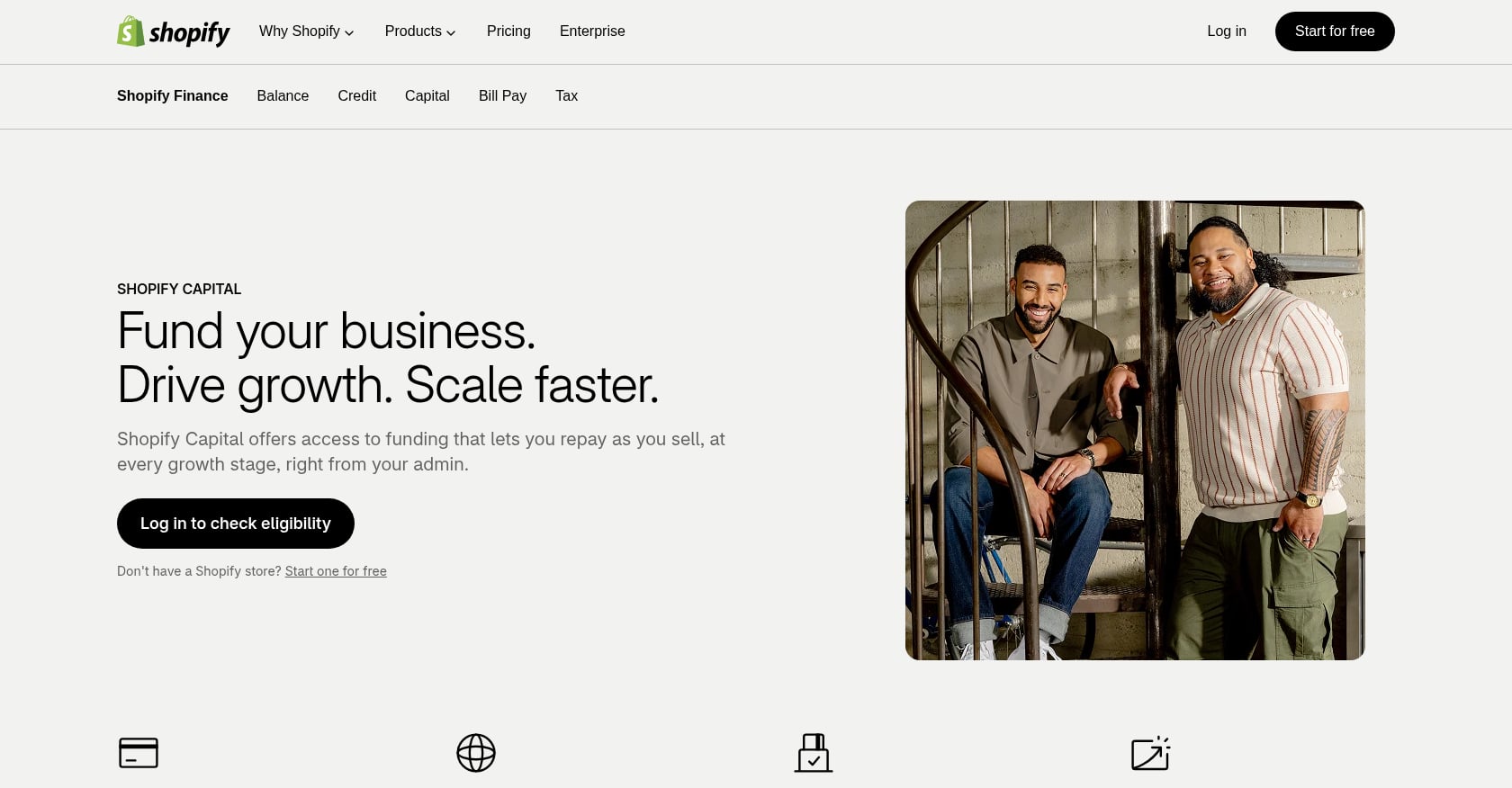
Best for: E-commerce sellers or POS-based businesses already operating on these platforms.
Platform-integrated capital products offer funding typically within 1–5 business days. Square Loans, for example, proactively surfaces customized offers to eligible sellers with no paperwork needed, delivering funds as soon as the next business day. Shopify Capital works similarly, advancing capital based on your sales history and repaying automatically as a percentage of daily sales.
Cost:
These products charge a single upfront fee rather than an interest rate. The total cost varies by platform, offer size, and repayment speed. Transparency is generally better than MCAs, but total cost can still be significant.
Key requirements:
- Active seller on the platform with consistent sales history
- You cannot sign up for Shopify or Square just to access their capital products
Pros:
- No separate application or paperwork
- Repayment adjusts with sales volume (“On busy days I repay more, and on slower days I repay less,” as Shopify Capital users commonly report)
- One clear upfront fee
Tradeoffs:
- Only available to existing platform users
- Typically smaller amounts
- Not a general-purpose funding solution
- Limited to the platform’s lending criteria
Choose this if: You’re already on Shopify, Square, or a similar platform, need a modest amount, and want minimal friction.
2. BDC Small Business Loan

Best for: Established Canadian businesses (12+ months, $100K+ revenue) that can wait 10–30 days for better rates and terms.
BDC (Business Development Bank of Canada) offers loans up to $350,000 for eligible small businesses. Online applications for loans under $100K can see decisions in as few as 3–5 business days, and after approval, funds could be available in less than a week. That’s still significantly faster than the 15–30 day average for traditional bank decisions.
Cost:
BDC typically charges Prime + 2–6%, which is higher than chartered banks (Prime + 1–3%) but meaningfully lower than most fintech alternatives.
Key requirements:
- At least 12 months in business
- Minimum $100,000 in annual revenue
- Personal credit score of 600 or higher
Pros:
- Best price-to-speed ratio among non-bank options
- Government-backed lender focused exclusively on Canadian businesses
- Larger loan amounts available than most alternative lenders
Tradeoffs:
- Not same-day by any realistic definition
- More stringent requirements than alternative lenders
- Application process, while faster than banks, still requires documentation
Choose this if: Your need isn’t truly urgent (you can wait 10–30 days) and you want the lowest-cost option outside of a chartered bank.
3. CSBFP (Canada Small Business Financing Program)
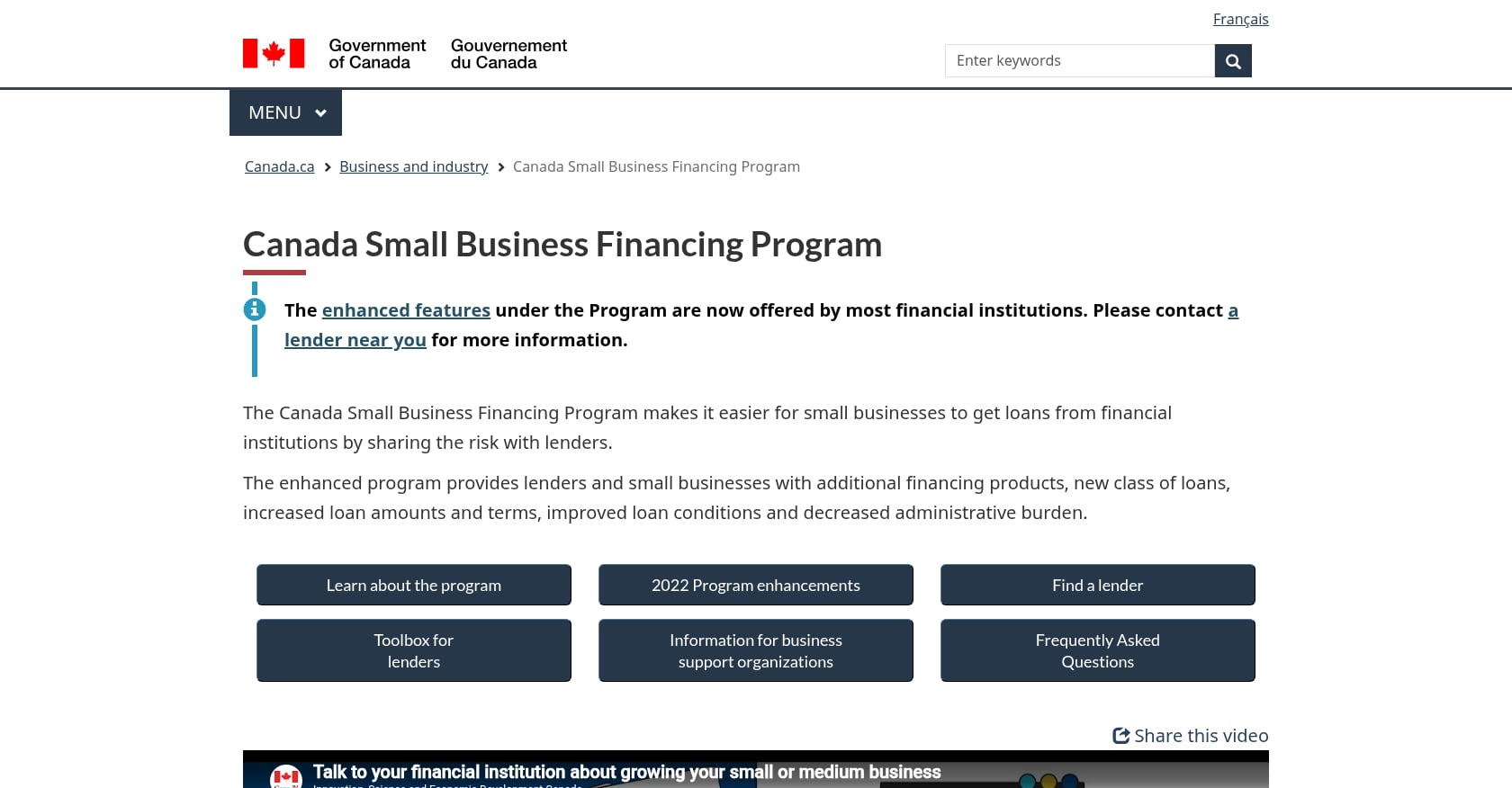
Best for: Startups and small businesses (under $10M revenue) buying equipment, making leasehold improvements, or needing a working capital line of credit.
The CSBFP is Canada’s primary government-backed loan program for small businesses. The federal government guarantees up to 85% of the lender’s losses if you default, which significantly increases your chances of approval with participating banks and credit unions.
2026 program highlights:
- Maximum aggregate financing of $1.15 million ($1M for real property/equipment/leaseholds, $150K for a working capital line of credit)
- New loan classes added: intellectual property and working capital term loans
- Revolving line of credit product (up to $150,000) available for the first time
Speed:
Expect 2–8 weeks. This is not remotely a same day business funding option. But it belongs on this list because it’s often the cheapest capital available, and many businesses should be applying for CSBFP financing while using a faster option as a bridge.
Cost:
Bank rates plus a 2% registration fee and 1.25% annual administration fee. This is the lowest-cost financing on this list.
Key requirements:
- Under $10 million in annual revenue
- Eligible purpose (equipment, leaseholds, commercial real estate, working capital)
- Application through a participating bank or credit union
Pros:
- Lowest cost of any option listed here
- Government guarantee makes approval more likely
- Suitable for startups and newer businesses
Tradeoffs:
- Slowest option on this list
- This is a loan program, not a grant
- Limited to specific eligible uses
- Application complexity varies by participating lender
For startups exploring this path alongside other options, see what’s involved in securing funding for a new business.
Choose this if: You have the time to wait, want the cheapest capital available, and your need fits an eligible category. Apply in parallel with a faster option if timing is tight.
Tier 4: The Strategic Play
1. Working with a Commercial Finance Broker
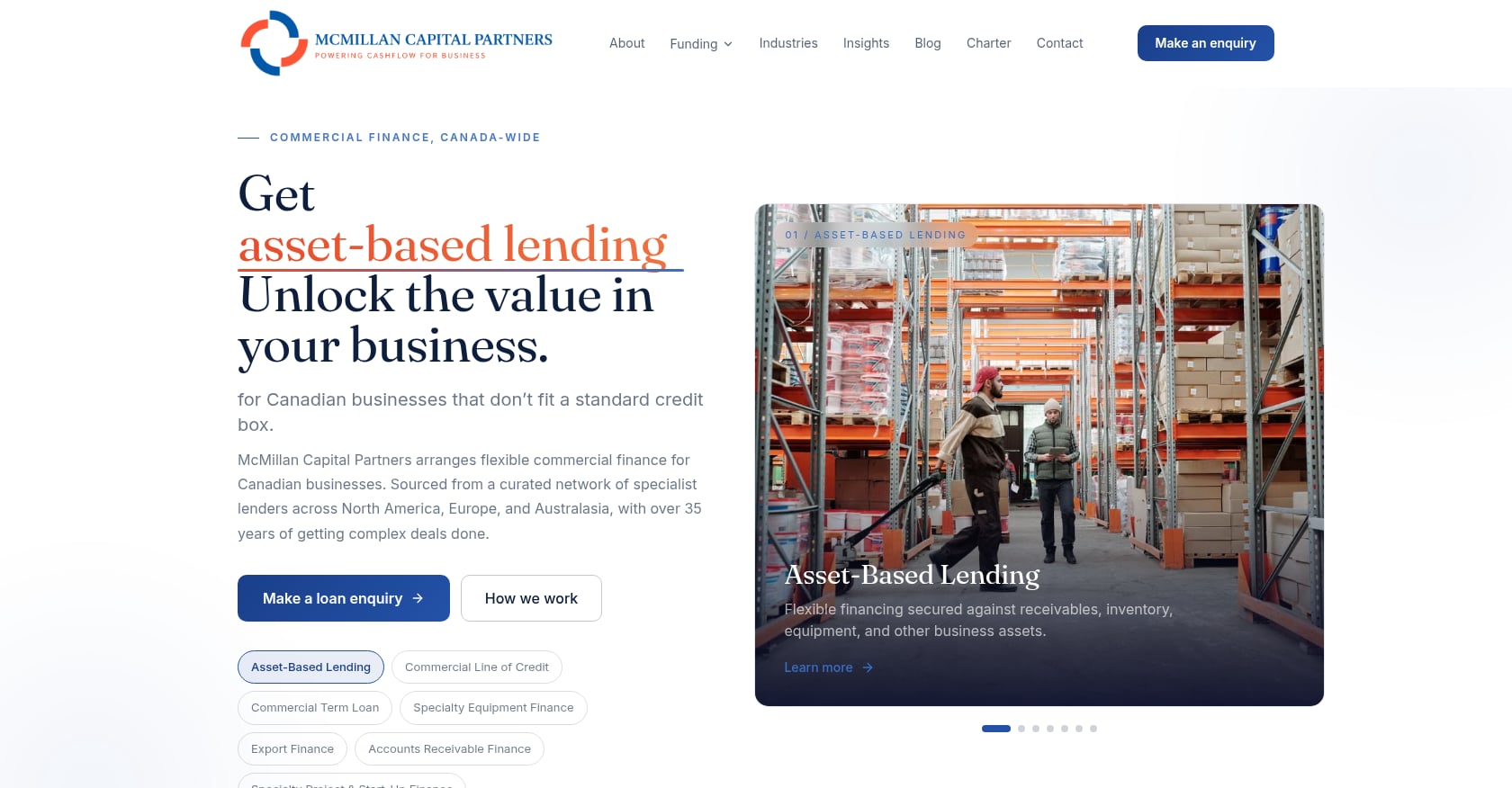
Best for: Businesses that want the right product (not just the fastest) and want to avoid costly mismatches.
This is the meta-option. A commercial finance broker doesn’t provide capital directly. Instead, they match your business to the right lender and product from among all the options above, often accessing niche lenders that don’t market directly to borrowers.
The value becomes clear when you consider that non-bank lenders serve an estimated 20–30% of the Canadian SME market that can’t access traditional bank financing. That’s a massive segment, and navigating it without guidance means you’re likely leaving money on the table or overpaying for speed you don’t need.
A broker’s role includes:
- Translating your business story into a file that reads cleanly to lenders
- Matching your deal to lenders that actually like your profile and asset type
- Layering multiple facilities (for example, factoring plus equipment financing) for optimal liquidity
- Warning you away from products that don’t fit, particularly high-cost daily-withdrawal structures
The Canadian alternative lending market is projected to reach approximately $30.59 billion by 2029, growing at a 13.5% CARG from 2025. That growth means more options, but also more complexity. A broker cuts through the noise.
Pros:
- Access to multiple lenders across Canada and internationally
- Consultative approach that prioritizes fit over speed alone
- Can structure complex deals that single-product lenders can’t
- Reduces the risk of ending up in an expensive mismatch
Tradeoffs:
- Timeline varies by the product ultimately matched
- Adds an advisory step to the process (though this step typically saves time overall by avoiding rejected applications)
- Final terms depend on the partner lender
Choose this if: You want someone who speaks both borrower and lender, can package your deal properly, and will steer you toward sustainable capital rather than the flashiest offer.
Speak with a funding advisor to discuss which option fits your situation.
The MCA Warning: What Every Business Owner Should Know
Merchant cash advances deserve their own section because the risks are that significant.
MCAs are legal in Canada, but they operate in a regulatory grey zone. They’re not classified as loans in most provinces, which means consumer lending protections often don’t apply. Ontario and British Columbia have begun reviewing MCA practices, but federal oversight remains limited.
How the cost math actually works:
MCA providers quote “factor rates” rather than interest rates. A factor rate of 1.30 sounds modest until you do the math. On a $50,000 advance repaid over six months, you pay back $65,000. The effective APR exceeds 60%, and on shorter terms, it can climb into triple digits.
The stacking problem:
When one MCA isn’t enough, some business owners take a second or third advance from different providers. Each one pulls a daily percentage from your card revenue. Multiple daily withdrawals on top of each other is where things get dangerous. Cash flow becomes unpredictable, and the total repayment obligation can exceed what the business generates.
Enforcement history:
Multiple FTC enforcement actions in the United States illustrate the pattern. Yellowstone Capital paid a $9.8 million settlement for deceiving borrowers about fees. RAM Capital’s operators were permanently banned from the industry. These aren’t isolated incidents.
When MCAs are the only option:
Sometimes they are. If you’re facing an immediate emergency, have no B2B invoices, no eligible equipment purchase, insufficient credit for a line of credit, and no time to wait for a BDC or CSBFP application, an MCA may be your only same day business funding option. But go in with your eyes open about the cost, and start pursuing a longer-term replacement facility immediately.
Your Document Readiness Checklist
The fastest way to accelerate any funding timeline is to have your paperwork ready before you apply. Here’s what most lenders need:
- Last 3–6 months of business bank statements (PDF, directly from your bank)
- Most recent fiscal year-end financial statements (or notice of assessment)
- HST/GST returns (last 2–4 quarters)
- Accounts receivable and accounts payable aging reports (for factoring or ABL)
- Equipment quotes or invoices (for equipment financing)
- Articles of incorporation and business licence
- Government-issued ID for all owners/directors
- Void cheque or PAD authorization form
Having these ready can mean the difference between same-day funding and a week-long back-and-forth. For a more detailed version, see the full lender document checklist.
How to Decide: Speed vs. Cost vs. Fit
Not every business needs the fastest option. Here’s a simple framework:
Choose speed (Tier 1–2) when:
- You’ll lose a specific contract or opportunity without capital today
- The cost of the funding is less than the value of the opportunity
- You have a clear repayment path within the stated term
Choose cost savings (Tier 3) when:
- Your need is real but not immediate (you can wait 2–8 weeks)
- You qualify for BDC or CSBFP programs
- Long-term rates matter more than short-term speed
Choose fit (Tier 4, broker-assisted) when:
- You’re unsure which product matches your situation
- You’ve been declined by a bank and don’t know where to go next
- You need multiple facilities layered together
- You want to avoid expensive mistakes
For guidance on choosing the right finance product, it helps to map your situation against all available options rather than defaulting to whatever appears first in a Google search.
Frequently Asked Questions
Can I really get business funding the same day I apply?
It depends on the product and your preparation. Merchant cash advances and existing invoice factoring facilities can fund within hours. Online term loans and alternative lines of credit sometimes fund within 24 hours if you apply early in the day with complete documentation. But for most products, “same-day” refers to the approval decision, not the actual deposit of funds into your account.
What is the cheapest same day business funding option in Canada?
Invoice factoring (with an existing facility) offers the best combination of speed and cost, with fees of 1.5–3% per month. If you can wait longer, BDC loans (Prime + 2–6%) and CSBFP-backed financing offer the lowest rates, though they take weeks, not hours.
Are merchant cash advances legal in Canada?
Yes, MCAs are legal. However, they’re largely unregulated at the federal level. Because MCAs are structured as purchases of future receivables rather than loans, standard lending regulations often don’t apply. This means fewer protections for borrowers. Always read the full contract and understand the total repayment amount before signing.
What credit score do I need for same-day business funding?
Requirements vary widely. Some alternative lenders accept scores as low as 400–500. Invoice factoring bases approval on your customers’ creditworthiness, not yours, making it accessible even with poor personal credit. Bank products and BDC loans typically require 600+.
How does invoice factoring differ from a business loan?
Factoring is the sale of your accounts receivable, not a loan. You sell unpaid invoices to a factoring company at a discount and receive 85–95% of their value upfront. Because it’s a sale rather than borrowing, factoring doesn’t add debt to your balance sheet. Approval depends on your customers’ ability to pay, not your own credit history.
What documents should I prepare before applying for fast business funding?
At minimum: 3–6 months of business bank statements, recent financial statements or tax filings, government ID, articles of incorporation, and a void cheque. For equipment financing, add the equipment quote and seller details. For factoring, add your AR aging report. Having these ready before you apply is the single biggest factor in whether you actually receive same-day funding.
Should I use a finance broker or apply directly to lenders?
Applying directly works when you know exactly which product fits and you meet that lender’s criteria. A broker adds value when your situation is complex, when you’ve been declined elsewhere, or when you want to compare options across multiple lenders without submitting separate applications to each one. Brokers can also layer multiple products (factoring plus equipment financing, for example) to build a more complete capital structure.
Is the CSBFP a grant?
No. The Canada Small Business Financing Program is a loan program, not a grant. The government guarantees up to 85% of the lender’s losses if you default, which makes banks more willing to approve your application. But you repay the full loan amount plus interest and fees.
Need help finding the right same day business funding option for your business? Rather than applying blindly to multiple lenders, tell us about your funding need and get matched to the right product for your situation.