
Loans for Food Trucks in Canada: Options, Costs and Approval
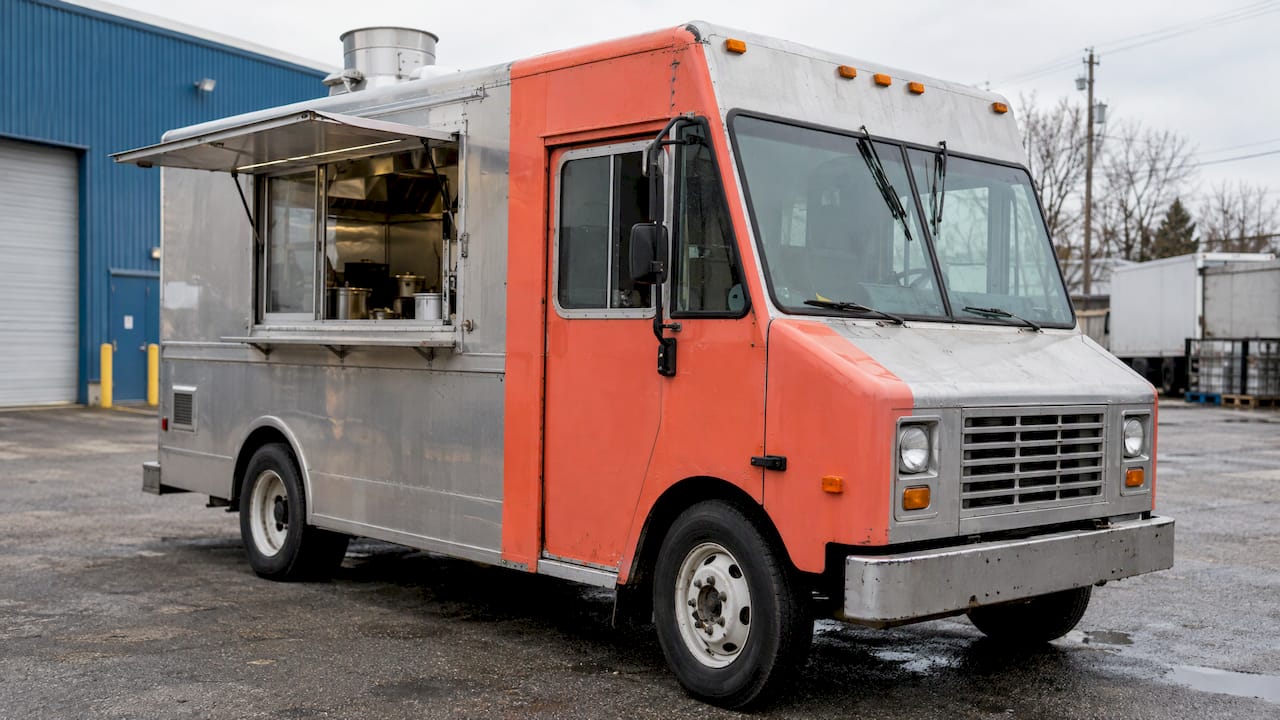
A food truck is a kitchen, a vehicle and a retail location in one purchase, and that is exactly why a standard bank credit box often struggles with it. The truck depreciates, the revenue is seasonal, and many owners are in their first three years or carrying past credit problems. The practical answer is to match each part of the build to the right kind of financing: equipment finance for the truck and kitchen, a term loan or start-up finance for the launch, and a line of credit for the slow months. McMillan Capital Partners arranges all of these through a curated network of specialist lenders, including for owners a bank has already declined.
- Food truck financing is usually a combination: equipment finance for the truck and kitchen, a term loan or start-up funding for launch costs, and a line of credit for seasonal cash flow.
- Lenders look at your credit history, your repayment ability and your cash flow. A bank decline does not end the conversation if the file is presented well.
- Canada’s government-backed small business loan program is a useful yardstick: a maximum of $1 million for term loans, $150,000 for lines of credit, and rate ceilings set against prime.
- Always ask for the full cost in writing, including fees, before you commit.
- We typically close in 2 to 4 weeks and show the full cost before you commit.
Table of Contents
- What a food truck loan can actually pay for
- The main types of food truck financing
- What it costs: reading a quote
- What lenders check, and how to prepare
- Applying in five steps
- Why a broker helps with a food truck file
- Start with the right facility
- FAQ
- Sources
What a food truck loan can actually pay for
The word “loan” covers several different tools, and each one pays for a different part of the business. Mixing them up is the most common reason an application stalls.
The federal Canada Small Business Financing Program (CSBFP), run by Innovation, Science and Economic Development Canada (ISED), shows the standard categories well. Its term loans can finance new or used equipment, leasehold improvements, intangible assets and working capital costs. Its lines of credit can finance working capital only. Share purchases and assets bought by a holding company are not eligible.
For a food truck owner, that translates to a practical split:
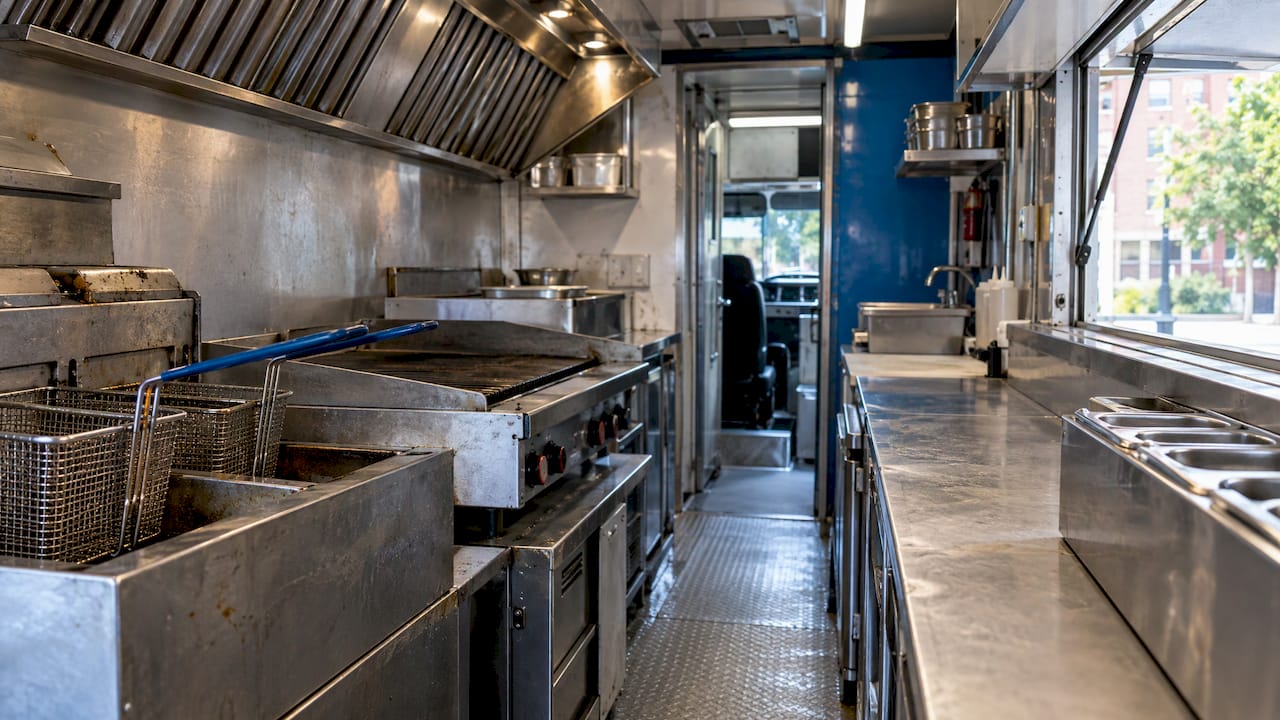
- The truck and fit-out. The vehicle, the grill, fryers, refrigeration, generator and point-of-sale hardware are equipment. This is the cleanest thing to finance because the asset itself backs the funding.
- Branding and permits-related setup. Wraps, signage, website and some licensing costs are softer spending. These usually fit better in a term loan or start-up funding than in equipment finance.
- Working capital. Food inventory, commissary rent, payroll and the winter gap between festival seasons. This is a cash-flow need, not an equipment need.
Knowing which bucket a cost belongs in tells you which product to ask for, and it tells a lender you have thought the plan through.
The main types of food truck financing
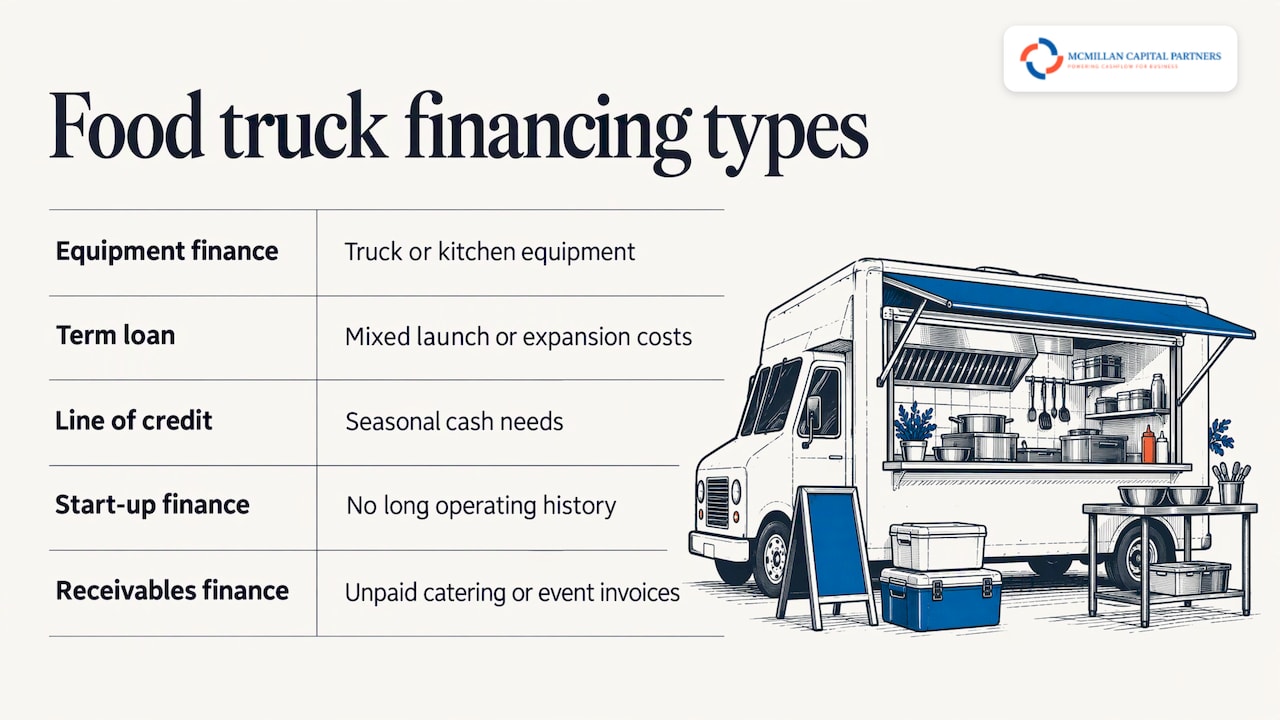
Equipment financing
What it is. A loan or lease where the truck or kitchen equipment is the collateral. The lender’s risk is tied to a physical asset it can value, which is why it is often the most approachable route for owners with thin credit files.
What it costs. Pricing depends on your credit, time in business and the age and type of the asset. We do not publish a rate, because the lender and the structure change the number. What matters is the total cost over the term, not only the monthly payment.
Who it fits. Owners buying a new or used truck or upgrading the kitchen. Our equipment financing is built for this, and our step-by-step guide to applying for equipment financing walks through the paperwork.
Term loans
What it is. A lump sum repaid on a fixed schedule. Our business term loans run from $50K to $10M+, which is far above what a single food truck needs, so the range comfortably covers a launch or a multi-truck expansion.
What it costs. Interest plus any lender fees. The government-backed program is a helpful reference point: its term-loan rate ceiling is prime plus 3% for variable rates, or the lender’s single-family residential mortgage rate plus 3% for fixed, per the ISED FAQ.
Who it fits. Owners with a mix of costs: the truck, the fit-out, the first months of inventory and payroll.
Business lines of credit
What it is. A revolving limit you draw on and repay as needed. You pay interest on what you use.
What it costs. Under the federal program, line-of-credit rates are capped at prime plus 5%, and the maximum is $150,000, according to the same ISED FAQ.
Who it fits. Seasonal operators. A truck that earns most of its income between May and October still pays insurance, commissary fees and repairs in January. A business line of credit is the bridge across that gap. Our guide to working capital for seasonal businesses lays out the options in more depth, and our comparison of a loan versus a line of credit helps you pick.
Start-up finance
What it is. Funding for businesses without a long operating history. The federal program, for instance, treats most start-ups as eligible, along with existing for-profit, not-for-profit and charitable businesses with gross revenues of $10 million or less, as corporations, sole proprietors, partnerships or cooperatives (ISED).
Who it fits. First-time operators. Our start-up finance service is for Canadian businesses in this position, where the file has to lean on the owner, the plan and the asset rather than years of statements.
Catering and event invoices
If part of your revenue comes from corporate catering, festivals or film sets, those customers often pay on 30 to 60 day terms. Cash sits in unpaid invoices while your supplier bills come due. Accounts receivable financing advances cash against those invoices, so a large catering contract does not drain your working capital while you wait to be paid.
What it costs: reading a quote
The cost of a food truck loan is more than the rate. Compare these items on every quote:
- Interest rate, and whether it is fixed or variable.
- Fees: set-up, administration, renewal and registration fees. In the federal program the registration fee is 2% of the loan and can be financed into it, while conventional lender set-up and renewal fees cannot (ISED).
- Term length. The program’s maximum government-covered term is 10 years for equipment and leasehold improvements, and 15 years for real property (CSBFP guidelines). A food truck is a depreciating asset, so match the term to its useful life.
- Payment shape. Under the same guidelines, payments may be blended, seasonal or escalating, provided at least one interest and one principal payment fall each year. A seasonal schedule can suit a truck that earns most of its revenue in summer.
- Prepayment. The guidelines allow prepayment at any time with charges no greater than for a conventional loan of the same amount. Ask any lender what its own terms say.
A worked example shows why total cost matters. Take a $90,000 truck and kitchen financed over 7 years. A lower monthly payment from a longer term will usually mean more interest paid in total, while a seasonal schedule can lower your summer-off payments but not erase them. Ask for the total repayment figure in writing and compare quotes on that line. We show clients the full cost before they commit, so the number you compare is the number you pay.
What lenders check, and how to prepare
Lenders want to know two things: can you repay, and what happens if you cannot. The federal program’s rules show the baseline. Under the Canada Small Business Financing Regulations, a lender must obtain credit references or run a credit check on the borrower and anyone legally or financially responsible for it, and must assess repayment ability against all other financial obligations. The ISED guidelines add that for a newly incorporated borrower with no credit history, the lender should check the principal owners instead.
In practice, for a food truck that means your personal credit and your personal debts are part of the file, especially in the first years.
If a bank has already said no
A decline tells you the file did not fit that lender’s credit box. It does not say the business cannot be financed. Specialist lenders weigh things differently: the asset, the cash flow, the contracts and the owner’s plan. What changes the outcome is how the file is presented.
Before you apply, assemble:
- Monthly cash-flow figures that show the seasons, not only an annual total. Lenders want to see the winter dip and how you cover it.
- A booking calendar with festivals, markets, catering clients and repeat customers, backed by contracts or invoice history where you have them.
- A clear account of past credit issues: what happened, when, and what has changed since.
- The truck details: year, make, mileage, a vendor quote or bill of sale, and the equipment list.
- Proof of insurance: commercial vehicle and liability coverage in place before funds advance.
- Corporate and personal identification, and recent bank statements.
Owners with a past bankruptcy, proposal or collections history should say so up front. Surprises found during due diligence cost more time than problems disclosed in the first conversation.
Applying in five steps
- Define the need by bucket. Split the budget into truck, fit-out, launch costs and working capital. Each bucket points to a product.
- Gather the file. Use the checklist above. A complete file moves faster and reads as a lower risk.
- Request quotes on total cost. Ask for rate, fees, term, payment schedule and total repayment in the same format each time. We present these clearly before you commit.
- Choose the structure, not only the lender. A well-structured equipment loan plus a modest credit line often serves a food truck better than a single large loan.
- Plan for funding day. Insurance, vendor payment and registration of the security all need to line up. We handle lender communication through funding, so questions from the lender go through us rather than landing on you in the middle of a build.
Why a broker helps with a food truck file
The lender that suits a first-year truck with one bruised credit report is rarely the one on the corner. Our network includes specialist lenders across Canada, the USA, Europe, Australia and New Zealand, and our job is to match each deal to the right one. We translate your circumstances into a lender-ready proposal, so the strengths of the business (the bookings, the asset, the margins) are in front of the lender in the form it expects.
Founder Neil McMillan has more than 35 years in commercial finance and built a factoring company from the ground up. That background matters for food trucks because the best structure is often a combination, such as equipment finance plus a line of credit plus invoice financing for catering clients.
Start with the right facility
If you are buying or upgrading a truck, begin with our equipment financing. If you are launching with limited history, see start-up finance.

Tell us the truck, the budget and your credit situation, and we will come back with the lenders that fit and the full cost of each option. Complex, urgent and non-standard deals are our focus, and we typically close in 2 to 4 weeks. You can start from mcmillancp.com. For a wider view of the options, our guide to alternatives to traditional bank loans is a good next read.
FAQ
Can I get a food truck loan with bad credit?
Yes, it is possible. Lenders must look at your credit, but specialist lenders weigh the asset, your cash flow and your bookings alongside the score. A clear explanation of past issues and a well-prepared file improve the odds. We work with owners whose banks have declined them.
How much can I borrow for a food truck?
It depends on the truck, the equipment, your cash flow and your credit. For reference, the federal small business program caps term loans at $1 million and lines of credit at $150,000 (ISED). Our term loans start at $50K and go to $10M+.
Can a start-up with no operating history get financing?
Yes. Start-ups are generally eligible under the federal program’s rules, and lenders of start-up finance look at the owner, the plan and the asset. Expect to provide a business plan, projected cash flow and the truck quote.
What should I compare between two food truck loan offers?
Compare the rate type, all fees, the term, the payment schedule, prepayment terms and the total repayment amount. The monthly payment alone hides the real cost.
Sources
- Canada Small Business Financing Program: Frequently asked questions for small businesses (ISED)
- Canada Small Business Financing Regulations, SOR-99-141
- Canada Small Business Financing Program guidelines (ISED)